Saturday, February 25, 2012

Friday, February 3, 2012

LaFaro, Gomez, Evans and Peterson or Peterson, Evans, Gomez and LaFaro (Your Choice) Just Some Reflexions


By Claudio Botelho
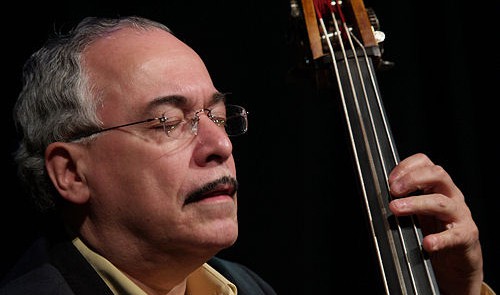
If there’s a bass player who makes me listen to everything he plays, his name is Eddie Gomez. Since his early days with Bill Evans, after replacing Chuck Israels who had taken the place of the subtly deceased and greatly mourned Scott LaFaro, he caught my attention as someone who, starting from where LaFaro stopped, took his duties with great gusto and passion and, more, in MHO, due to his great dexterity, deepened LaFaro‘s breakthrough! Between 1961 – the year of this young man passing, aged only 25 – and 1966, when Evans discovered Gomez, I think not much new happened.
From then on, things moved: if LaFaro had brought the bass from the kitchen and took it to the living room, Gomez placed it in its most alluring area, just before a great window from which it could envision and explore a new landscape.
What was the role of LaFaro and Bill Evans in this revolution? If the first introduced a new way to play, the latter recognized it in accepting to share the spots, so allowing the new trend to blossom. It seems to me the due belongs to both, as Evans’ humble spirit surely played a decisive part in bringing the bass to the forefront, by letting it shine along with his piano. The piano trio then started to be a joint venture: some departure from the way they used to be!
I could never listen much to LaFaro and his passing at such an early age prevented us from knowing what could he have done after that brilliant and short tenure with Evans, so, for me, his greatest merit was to show the bass could be much more than a rhythm setter or a pace “follower”… How would he be playing today? God knows…
Well, after LaFaros’s death and a somewhat long period of mourning and away from the piano, Evans went back to play and replaced his former bassist, as above said. Later, in ’66, entered Gomez and the bass chair, for the next eleven years, was filled from someone who, as stated earlier, brilliantly followed the steps of that antecessor.
Evans, in accordance with the way he thought a trio should play, let Gomez put out his abundant flow of notes which, in my view, took still further La Faro’s trend: through cascading pluckings in his instrument strings, in the most authoritative way, he played as if making a second chorus, while keeping his duties in the main theme. So, instead of one note at a time, he produced two, just like LaFaro did before him.
Certainly, the following eleven years were the most brilliants for Evans’ trio and the emphasis on interplay among its members, as set by Evans/Lafaro earlier, reached its pinnacle in recordings like “Bill Evans at Monteaux jazz festival ‘68”, “the Bill Evans Album”, of ’71 and “You Must believe in Spring”, from ’78; this last one enclosing the definitive rendering of the song “Theme from M*A*S*H”.
If the two recordings made earlier, in ’61, with Lafaro and Paul Motian, were indisputably set trenders, having an ethereal aura of beauty which remains amazing to these days and will be forever (and this thanks to a god-given way to play only Bill Evans could do), later, the Gomez years with this trio brought an interplay even greater among its members, with bolder and denser arrangements which took the mainstream jazz language to its limits. Without never leaving behind the gorgeousness of its music, the trio could be as sublime as assertive, as shows its Montreaux recordings (with Jack Dejohnette’s expansiveness on drums), for instance, or any other of the two above mentioned. As a matter of fact, there are others which could show this as well.
I’m not stating this transformation (or evolution), if I can name it like this, was directly related to Gomez, nor am I excepting it couldn’t be even greater were LaFaro still with Evans, I’m just describing what happened and, honestly, in any case, Evans should be taken as the main “culprit” for this, with or without Gomez.
Gomez was double lucky: came after La Faro and could play with Evans for so much time. No one can say (except, maybe, Gomez himself) how would he play weren’t La Faro with Evans before him, but I feel it is reasonable to think the latter had some influence in his playing, as much as, say, Tatum had something to do with the way Oscar Peterson treated the keyboards … It’s fair to say they both had listened to their respective antecessors and, in a way or another, introduced, later, some elements of their music in their performances…
The busillis is: how would both play if their two very famous antecessors never existed? Some say Peterson was a shallow imitator of Tatum, an affirmation I strongly disagree: Peterson, in his years of Europe recordings for MPS, did some very exceptional works, exploring the possibilities of the piano with a dexterity never done before (or even afterwards) and for many times! Gomez has been sporting his wonderful and powerful bass playing for so long and both have crossed the extant borders and went way out beyond, although by much more “fine tuning” what existed than, properly, introducing new insights into this art.
Here, arise two questions related to some lack of acknowledgement from the part of us - jazz listeners - they suffer: didn’t we get used to their prolifctiness and just took them a little for granted? Second: the fact they did not introduce any “new wave”; any new “approach” in expressing themselves could have spoiled the recognition of their work, no matter how exceptional they are? You judge…
I’m just writing all this to express my great admiration for Gomez playing. He is my all time favorite bass player and I am eagerly waiting for his upcoming CD with Chick Corea and Paul Motian.
Meanwhile, I invite you to listen a recording he made with master pianist Guido Manusardi and Gianni Cazzola, for Splasc(h) Records, some twenty years ago, called “So That”.
As I said above, these are just some reflexions.
Ptum, ptrum, ptrumtuptrum…

Sunday, January 8, 2012

Tribute Recordings 2012 - 1

Niño Josele
Paz


Cover (Paz:Niño Josele)

By Michael G. Nastos
You would be hard pressed to find another recording where a flamenco guitarist interprets the music of Bill Evans. This one has Nino Josele playing select pieces performed and beloved by the modern jazz piano icon, and in three instances composed by him. A variety of settings are used, from solo acoustic guitar, some duo and vocal efforts, guitar-bass-drums, and a few guest cameos. The sound of Josele through Evans is thoughtful, introspective, facile, understated and romantic. Dynamics are shaded with a sweet restraint aside confidence in doing the music justice. The CD opens with the perfect prologue, the Evans overture "Peace Piece," as delicate and pristine a composition as anyone has ever written, played perfectly. Then the pace quickens as Josele and his trio kick up "Waltz for Debby," at first in typical 3/4 time, then in a higher 4/4 gear. The third Evans evergreen "Turn out the Stars" is more typically in flamenco style apart from all the other selections, again with the trio. There are six standards, the highlights being solo guitar samplings of "When I Fall in Love" and a multitude of distinct Spanish styles showcased during "The Dolphin," Jimmy Rowles ballad "The Peacocks" accented by Joe Lovano's piquant tenor sax, and Tom Harrell's trumpet playing an extrapolated melody on the second time repeat during "My Foolish Heart." "Hullo Bolinas" of Steve Swallow may be the unexpected choice of the recording, another slow ballad (of many) done with guitar and Marc Johnson's bass only. Also unexpected but less effective is Freddy Cole's reading of Paul Simon's "I Do It for Your Love." As a whole this project is well paced and placed, executed with plenty of soul, and should prove a discovery for those not familiar with Josele's excellent musicianship.

Sunday, December 18, 2011

Tribute Recording On Bill Evans - Part Eight

Alan Pasqua
Twin Bill: Two Piano Music Of Bill Evans


By Marc Myers at JazzWax
It takes a lot of courage for a pianist to take on Bill Evans. It requires even more courage for that pianist to overdub himself recording Evans' songs. After all, any pianist who would attempt such a thing would be asking for a ton of trouble. Evans fans are pretty particular, passionate and protective of the late pianist and have a low tolerance for intruders. Unless, of course, a pianist paying tribute to Evans actually pulled it off. Alan Pasqua does just that on Twin Bill: Two Piano Music of Bill Evans.
But let's back up. I generally don't care for Evans tribute albums. My feeling is Evans aced everything he recorded, and the last thing I generally want to hear is someone else's interpretation of his definitive versions. So I was already suspect when I spied Pasqua's album title.
Next is the double-decker gimmick. Evans recorded two albums in which he overdubbed himself using multitrack recording techniques—Conversations with Myself (1963) and Further Conversations with Myself (1967). So the fact that Pasqua was trying to pull off something akin to Yet Even Further Conversations seemed a bit gauling—like breaking into a museum and putting your feet up on an exhibit's furniture.
Flippng the CD over, I noticed that the track list included Take Me Out to the Ballgame, Vindarna Sucka Uti Skogarna and Grace—songs that Bill Evans never recorded. Now, I thought, we were into appalling territory. This would be our museum chap breaking out a tuna sandwich.
Furiously tearing open the plastic, I slipping on the CD, fully expecting to hit eject after about eight bars into the first track. But a funny thing happened on the way to the trash. I actually loved what I heard.
Pasqua manages to pull off his triple play by employing crystal clear reverence for Evans and his lyrical space-swing technique. These tracks aren't ape jobs, in which a pianist does his or her best to sound as though they are playing Evans transcriptions. Instead, they are solid, reverential interpretations that live inside Evans' style and soul.
From Very Early and Gloria's Step to Nardis and Interplay, Pasqua delivers a full, lush Evans tribute. In his overdubs, Pasqua focused less on attempting the complex, fairy-delicate musical dialogues that Evans pulled off in his Conversations albums. Rather, Pasqua wisely uses the overdub to give this music heft and dynamism, always mindful of Evans' sensitivity and style.
As for Take Me Out to the Ballgame, it actually works. Evans, of course, wasn't above vamping children's songs or radio jingles. He had great fun recording Santa Claus Is Coming to Town, Little Lulu and the WNEW Theme in the '60s. Paqua plays Ballgame as a waltz, and darned if his harmony choices don't sound like Evans himself. Pasqua leaves the listener feeling as though the master himself were sitting at the keyboard, his head bent over, his eyes closed.
Oh, one more thing. Pasqua bravely left himself open on yet a fourth front. Did I mention that this is a solo album?

Sunday, October 23, 2011

Keeping Time With Bill Evans

Screen shot 2011-07-10 at 6.54.18 PM

Keeping Time with Bill Evans

By: Joseph Vella at http://www.huffingtonpost.com/joseph-vella 
Posted: 10/5/11 01:25 PM ET
I feel fortunate to be old enough to have grown up in a time where listening to the radio and buying albums was one of the activities you looked forward to. Each week my friends and I ventured into San Francisco and hit the Tower Records store on Columbia and Bay Street with hopes of buying a hot new record... or cassette or 8 track... whichever we could afford. We combed through the new release shelves, which were front and center, then checked out our favorite artists' albums and finally, went through the discounted cut-out bins (remember those?). One such Saturday, I stumbled upon a cut-out priced Bill Evans Trio cassette tape entitled You Must Believe in Spring. Although I didn't make a habit of buying cassettes, I did purchase this tape because it was a new release that I had heard a lot on the radio. It was also the first Bill Evans Trio album released after the pianist's death and featured bassist Eddie Gomez and drummer Eliot Zigmund... and it was only $3.99.
You Must Believe in Spring turned out to be a keeper and one of my all-time favorite Bill Evans Trio albums and one that I still return to for enjoyment and inspiration. It always works. I recently played the album after not having heard it for some time, and it again just floored me. What an amazing work and what a brilliant trio. I thought it would be cool to explore this album in a greater context and interview one of the remaining trio members and see if this session was as special to him as it was to me and hopefully you. So I reached out to the great drummer Eliot Zigmund who graciously agreed to discuss this work as well as his distinct approach to jazz drumming. Enjoy this behind the scenes look at one of the greatest trios and recordings in jazz history.
Tell us about your approach to drumming?
Eliot Zigmund (EZ): My approach to the drum set from day one was to play with whatever was going on around me and find ways to play. I always had a real good light touch from the beginning. I learned to play brushes very early and intensely when I first started playing because I only had a snare drum and then a snare drum and a hi-hat. For long periods at a time I only worked with a snare drum and hi-hat and then a bass drum and then finally a ride cymbal and eventually a couple of toms. My parents bought me my drum set one piece at a time. My technique was secondary and I never thought of myself as a virtuoso drummer. I always saw myself as part of the team. As a supportive player, I tried to be as expressive as possible. I've felt my role as a drummer was as a team player to enhance, any way possible, what was going on around me. The difference in a trio and a bigger group is the communication between the players because they don't have to function as just a rhythm section. The relationship becomes a little more intimate. There's things that can be assumed or omitted and there's greater potential for abstraction.
How did you approach drumming with Bill's trio?
EZ: I was very influenced by the music that was going on around me particularly Tony Williams and Jack DeJohnette. There was basically a revolution in drumming going on at that point. I really liked the way Jack had played with Bill. He was very abstract, used colors a lot. So I was thinking that way musically at that time and tried to bring a lot of color and expressiveness. I was just trying to give Bill and Eddie what I worked in that context.

Tell us about the session for You Must Believe in Spring (1977)?
EZ: It was a very positive session and that is a great record. We had a lot of great performances with that band. When the band was happening and the acoustics and conditions were right, that band played well a lot of the time. We were just very lucky to capture one of those performances on record because a lot of times that magic may or may not happen to that degree on a record. You're kind of lucky when it does. There's actually a bootleg from that period in Europe of a live concert (Bill Evans - In His Own Way) where the band plays great and in a little bit of a looser fashion but with the same types of nuances but with a little more swing because it was a live performance . I think we had a very high level when it was happening and it was also compared a lot to Bill's first trio.
Is there a specific track that holds a special meaning to you?
EZ: The whole record is special but I didn't like that Warner Bros. added those three extra tracks when they reissued the album ("Without A Song," "Freddie Freeloader," "All of You"). That was a complete mistake and Bill definitely didn't want them on the record. One of the great things about the record was Tommy LiPuma was a great producer and he really had an ear to what was happening. We never played most of that music before so it was really fresh but yet we knew how to play together really well and we were excited to record. The album is unique and there are moments in all of it. It's just one of those records that almost sounds composed in a way. The whole thing is kind of a suite and that really gets me. We also got lucky because the trio played great and you don't always capture that in the studio. If it's not the right vibe, the right piano, the right producer... there are so many elements that go into it. Everything was just right for this recording and everybody was feeling pretty good.
Tell us about the chemistry between you and Eddie Gomez?
EZ: We really dug playing together. We did have something special and we were a good match at that point. He had a certain unique way of playing and I was trying to accommodate him too. Eddie and Bill were big stars in my eyes and people I had been listening to for years and I certainly felt like the low man on the totem pole in that band.
Can you share your reflections of Bill?
I see Bill as a 20th century equivalent to Mozart. He had that kind of genius and that kind of ear, that kind of ability to sit at the piano for 40 minutes and make an incredible arrangement of a standard tune that would stick in your mind for the next 40 years! He had that kind of talent and it was incredible. And the older I get the more aware I am of it. My fondest hope would be to go back now and play with Bill Evans and really give him what I think he was looking for and I am frustrated that I can't. I feel now that I understand much more of what he was looking for in a drummer and what he was trying to achieve and I think I could do these things now that would help him more than I did back then.

Sunday, October 16, 2011

Tribute Recordings On Bill Evans - Part Seven

Manuel Rocheman
The Touch Of Your Lips: Tribute To Bill Evans


By System Records
Manuel Rocheman is one of France’s finest jazz pianists and his latest CD honours the hugely influential Bill Evans who passed away in 1980. However it’s clear from the outset of this recording that Rocheman is never seeking to imitate and instead aims to evoke all the music that Evans has inspired within him.
Bill Evans’ favoured context was, of course, the piano trio where interaction with the rhythm section was paramount. It’s fitting, therefore, that Rocheman is joined by two very creative musicians on this recording - bassist Mathias Allamane and drummer Matthieu Chazarenc. Like Evans, Rocheman places a great deal of value on the interpretation of standards and performs a highly personal take on the title track, a tune immortalized by his predecessor. Also included are two originals by Evans, Johnny Mandel’s “Theme from M.A.S.H.” (from Evans’ “You Must Believe in Spring” album) and four new compositions from Rocheman himself.


By C. Michael Bailey
The French Naive record label, long known for its fine releases of classical music—particularly its ongoing Vivaldi Opera project—has initiated a jazz stream, highlighting French jazz talent, including pianist Manuel Rocheman's The Touch of Your Lips: Tribute to Bill Evans. It is somehow fitting that a tribute to America's last great pioneer in jazz piano (apologies to Cecil Taylor) comes from the land of the Impressionists. Bill Evans, more than any other pianist—notJohn Lewis, not Jacques Loussier, not even the great Art Tatum—elevated jazz piano to a chamber art. His music, particularly that performed close to his 1980 death, was characterized by a fragile intensity, a phenomenon so friable, that the pianist's performance threatened to dissolve at any moment, like a smoke ring in the wind.
Rocheman, in his tribute, adds a quickening support to Evans' art like scaffolding buttressing an ancient sculpture that better allows for the ethereal to gain substance, to be seen and heard. Few pianists could pull off the high-wire act that was Bill Evans, and Rocheman does not even attempt to. Instead, he provides definition, darkening the lines of Evans' thought, making a clearer picture. The Johnny Mandel melody of "Suicide is Painless," from the 1970 movie M*A*S*H, demonstrates Evans' visions in its Red Garlandblock chords and modern bass-drums support. Here, Rocheman solos confidently, with tart punctuation and comment on the higher harmony of the composition.
The Evans' composition "We Will Meet Again" from the pianist's last studio recording of the same title (Warner Brothers, 1979), offers the scent of Evans' 1961 Village Vanguard trio inMathias Allamane's bass solo. Allamane surfaces from the impressionistic somnolence with a musing, flat in tone that takes off on the perpendicular to Rochemann's direction. This is the most potent presence of the spirit of Scott LaFaro on the disc, one that is gratefully not overplayed. "Daniel's Waltz" lilts with a swinging ferocity that does not draw attention abruptly; rather, revealing itself like an intellectual connection being made, when things become clearer.
Bill Evans is justly a hard musical target. His influence is like an apparition barely seen but registered nevertheless. Rocheman and his trio turn up the musical sensitivity on Evans so that he may been seen with greater clarity without losing any of the mystery that was that pianist's certain specialty.
Track Listing: 
M.A.S.H; Send in the Clowns; We Will Meet Again; Daniel's Waltz; For Sandra; Only Child; Rhythm Changes; The Touch of Your Lips; La Valse Des Chipirons; Liebeslied.
Personnel: 
Manuel rocheman: piano; Mathias Allamane: bass; Matthieu Chasarenc: drums.

Saturday, June 25, 2011

Time Remembered - The 50th Celebration 1961-2011


June 25, 2011 - Brasilia, Brasil

By Leonardo Barroso
Four friends together (Claudio,Mateus,Lucius and Me) to celebrate music, to enjoy a masterpiece made 50 years ago. The Bill Evans Trio with Scott LaFaro and Paul Motian were together at the Village Vanguard on a Sunday, June 25, 1961.
It is consider to be one of the most influential jazz recording ever made, and the one that defines how a jazz-piano trio must sound. But for myself, is one the greatest music played, how can you not be moved by the great tune "My Foolish Heart"? It was a new way to hear this piece.
Tonight we heard a Bill Evans repertory, and started as listed below:
- Luigi Tessarollo & Stefano Bollani
- Eliane Elias, Joey Baron, Marc Johnson
- The Danish Radio Jazz Orchestra and Jim McNeely
- Kronos Quatet and Eddie Gomez
- Stefano Battaglia Trio
- Luca Lapenna
- The Drummonds
- JVC Portrait of Bill Evans: Eliane Elias, Brad Mehldau, Bob James, Dave Grusin, Herbie Hancock
Plus:
Bill Evans " You Must Believe in Spring"
The Tony Bennett/Bill Evans Album
Bill Evans The Complete Village Vanguard Recordings,1961


The night was wonderful and thanks to all my friends, and to all jazz fans in the World !!